INSPIRE Community Engagement Learning Network monthly meetings
Webinar
Community & consumer engagement Policy & advocacy Quality improvement
A couple of years ago I was speaking on the topic of community engagement to an audience of healthcare and social services providers in Denver, Colorado. During Q&A, a woman in stylish glasses and a bold-print dress stood up and timidly approached the microphone. “I’m sorry if this is a dumb question,” she began, “but I’ve been working on building out my organization’s community engagement programs and people just keep telling me, ‘meet people where they are.’ Can you tell me what that actually means?”
This is not a dumb question. This is a really good question.
Not only is there a lot we can unpack when we consider what practices bring a sentiment like “meet people where they are” to life; this question is emblematic of a central challenge faced by health and social care professionals who are tasked with community engagement: there isn’t a playbook for this essential – but rarely straightforward – work.
In February 2026, INSPIRE (Initiating National Strategies for Partnership, Inclusion, and Real Engagement) launched our Community Engagement Assessment & Practice Library to fill this gap by providing concrete, actionable guidance for organizations. The resource includes a brief self-assessment that guides users through a series of questions about their organization’s community engagement practices. Based on the responses, it then offers customized links to articles in the “Practice Library” – filled with implementation focused insights and real-world examples of authentic community engagement happening across the country.
Community engagement is a term that is applied and misapplied to a variety of activities ranging from health education and promotion, patient activation, service provider coordination, and most recently, to harmful new Medicaid eligibility requirements included in H.R.1.
We offer the following definition to clarify:
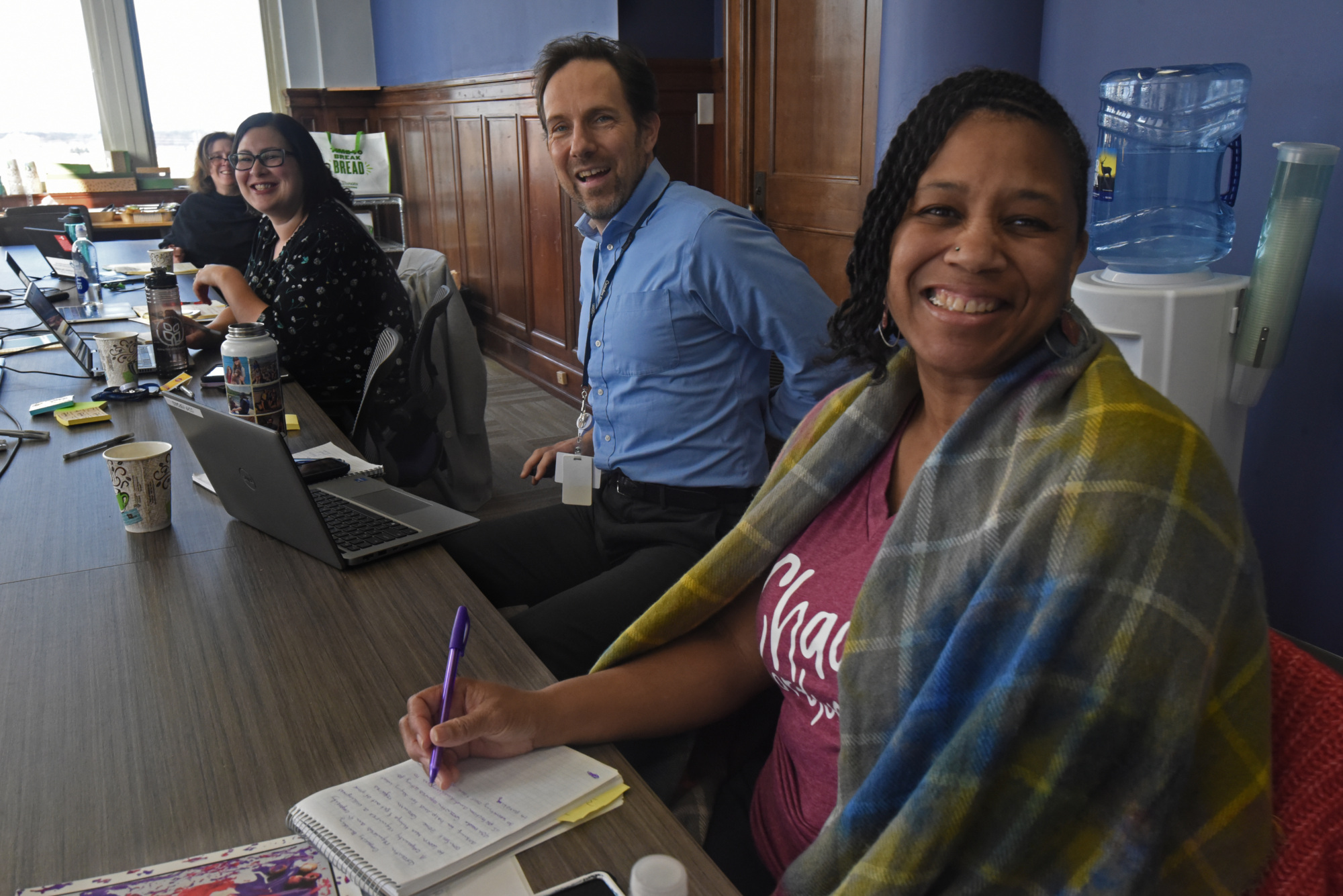
Community engagement refers to the different ways in which healthcare organizations can reach out to, engage, and partner with people with lived experience, with the goal of working together to improve healthcare and achieve positive health outcomes.
“People with lived experience” is a flexible but imperfect term. We use it to refer to individuals who have firsthand knowledge and insights from personally experiencing specific social, health, or systemic issues, providing unique perspectives that inform research, policy, and practice.
This term is sometimes used interchangeably with community members or residents, patients, plan members, clients, consumers, etc.
When we started building the Community Engagement Assessment & Practice Library our process was informed by a few key observations:
First, too many community engagement resources are stuck at 50,000 feet. Too many case studies and briefs describe ‘what’, but not ‘how’ and never get beneath the buzz words – like “meet people where they are”.
Second, too many resources are out of alignment with how we consume information. Lengthy guides, massive toolkits, and longform writing often live and die in abandoned browser tabs. And we say this as people who have also created lengthy guides, massive toolkits, and longform writing…
Finally, where we start matters. We all benefit from guidance that connects us with the right information at the right time. The Community Engagement Assessment & Practice Library is designed to provide ideas and resources customized to current strengths and areas of opportunity – so people have what they need to take that next (or first) step.
Our process was also shaped by our own commitment to authentic community engagement which was woven throughout the project team’s practices, processes, and structures.
One of the personal reflections I had throughout this project was the importance – and challenge – of mapping values to process. Caring is important, but it’s also easy. Where it gets tricky is figuring out how the things we care about actually show up in our work; shaping specific practices, policies, actions, and expectations.
Our project team included two people with lived experience, Rebecca Esparza and Stephanie Burdick, who have been part of INSPIRE from the earliest days of drafting proposals and wondering what a coordinated team of organizations and people with lived experience focused on advancing community engagement could even look like. Even before their work with INSPIRE, Rebecca and Stephanie were part of our National Consumer Scholars program – so our work and relationships with them have been built across a continuum of ongoing engagement and partnership over the course of years.
Rebecca and Stephanie both contributed to the creation of the Community Engagement Assessment & Practice Library throughout planning, project launch, implementation, data collection and analysis, creation of the final product, and dissemination. They strengthened the work by asking questions about how we were organizing and presenting information (and speaking up when it didn’t make sense) and then also by sharing where they have seen and experienced implementation efforts struggling in the past.
In addition to having Rebecca and Stephanie as part of the project team, we included a variety of ways for other people with lived experience to contribute to the project, such as: prioritizing their insights in creating the content within the Practice Library, and engaging people with lived experience as reviewers of both content and process throughout the project as well as testers during web-development of the resource.
People with lived experience have lives beyond their experience navigating health and social challenges. Our team recognized and embraced the full skillsets and experiences of all team members, by creating space for people to tap into their other areas of expertise such as digital marketing, public speaking, and copy editing. We were aided in doing this by investing time into relationship-building that enabled us to understand a fuller picture of the skills and experiences each team member brought to the table.
Everyone benefits from flexibility, and it is especially crucial for people with lived experience who are often balancing work with ongoing health and personal challenges. Our team created adaptable and flexible workflows and communication processes that allowed team members with lived experience to “step up and step back” as needed. Staff were available outside of standing meeting times to provide additional support. We prioritized open conversations about the roles people did and did not want to play and provided opportunities for people to opt out or to be supported in trying something new.
Even in teams like ours where trusting relationships facilitate open communication, power imbalance still exists across people who hold different roles and levels of responsibility. We took practical steps like transparently discussing roles and responsibilities, slowing conversations to spell out acronyms and explain jargon and checking for understanding both in the moment and in individual check-ins after the fact when needed, and making space for all team members to tap into their diverse skillsets and areas of interest — regardless of role.
Now it’s your turn at the Q&A mic. So what questions about community engagement are you pondering — maybe even nervous to ask?
Is it how to structure fair compensation for people with lived experience? How to align community engagement activities with organizational priorities? How to measure and demonstrate meaningful impact from community engagement? How to translate values into practice? Or maybe it’s “How can I get started?”
These are all good questions, and what I can promise you, is that you’re not alone in asking them.
We hope you will accept our invitation to explore the Community Engagement Assessment & Practice Library to grow your practices and deepen your commitment to authentic and impactful community engagement.
Webinar
Tool
Report
Snapshot