Tens of thousands of immigrants will lose Medicaid next fall when “big beautiful bill” eligibility rules take effect
Community & consumer engagement Strengthening ecosystems of care
What communities need to know to stay covered
Building the complex care field Community & consumer engagement Convening Policy & advocacy Public benefits
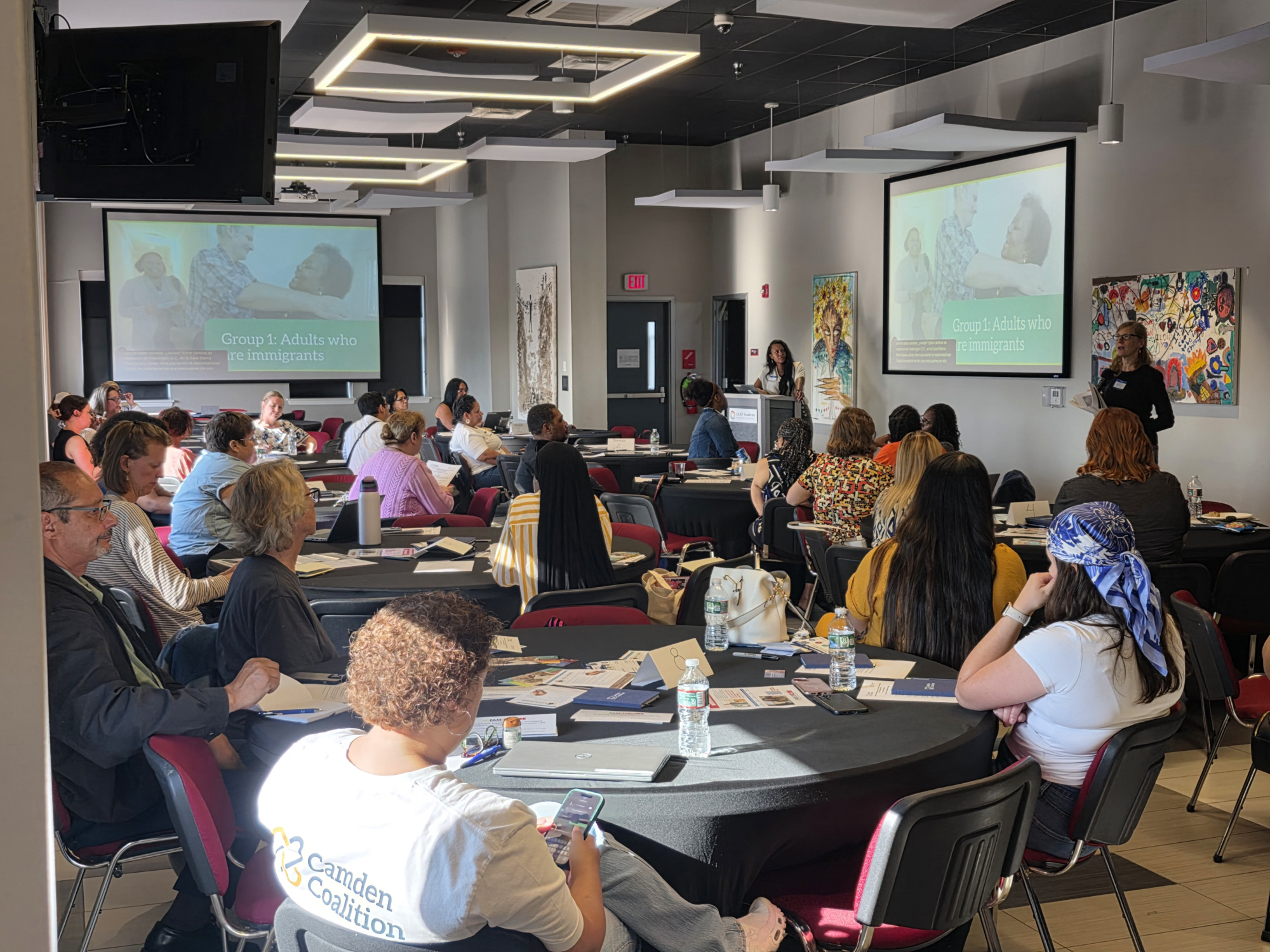

Starting in July 2026, the Camden Coalition hosts a monthly virtual work group meeting to address upcoming changes to NJ FamilyCare. The group aims to share resources and engage in advocacy to ensure that every eligible person enrolled in NJ FamilyCare Medicaid retains their coverage, and that people who become uninsured get connected to alternative coverage and free and low-cost healthcare.
The group’s objectives are to:
The group is for anyone and everyone interested in achieving the goal and objectives above – especially people at organizations who work with people enrolled in NJ FamilyCare Medicaid and the GetConnected NJ Marketplace.
The Group meets on the third Thursday of the month from 1 – 2:30 pm starting on July 16, 2026. Register for the work group meetings at the link below.
Watch the first training — What you need to know about Medicaid changes for immigrants
Watch the second training — What you need to know about Medicaid work requirements
Please forward this webpage with the work group meetings registration information to your colleagues and partners who work in the areas of healthcare, social services, immigration, faith-based, social justice, schools, legal aid, re-entry after incarceration, foster youth, disabilities, mental health, substance use treatment and more.
In the Fall of 2026, federal changes to Medicaid included in HR1, also known as “One Big Beautiful Bill Act” will go into effect. In New Jersey, this will impact eligibility for NJ Family Care and the requirements for maintaining coverage.
The majority (70%) of the 1.8 million people currently enrolled in NJ FamilyCare will NOT be affected by the new eligibility changes but, unfortunately, the remaining 30% of people (nearly 600,000) will be subject to two major changes:
These new rules do not apply to children, pregnant people, people who are immigrants with green cards, or people with disabilities and health conditions that prevent them from working.
Congress made these policy changes to intentionally take healthcare away from adults who are immigrants and from adults with very low incomes who became eligible for Medicaid when the federal government changed the adult eligibility rules several years ago (commonly known as Medicaid expansion adults) – many of whom also have serious healthcare needs. These policies are designed to punish people who are struggling to get by and need healthcare to survive. Taking away healthcare makes it harder for us to meet our basic needs, find work, and keep a job.
The consequences affect all of us. When more people become uninsured, families face more financial strain, healthcare providers see more people for free, and hospitals and clinics — especially in rural and underserved communities — could close.
In order to make this information accessible to all communities, Camden Coalition offers two training options: your organization can request a training from Camden Coalition staff (availability limited) or organizations are welcome to host their own training using Camden Coalition’s materials, available below in the resources section.
This webpage is meant to create a common place for organizations in South Jersey to share resources to help people retain their coverage related to the harmful changes to Medicaid as a result of federal law HR1. These resources include those created by the Camden Coalition and its partners, as well as the state of New Jersey and national organizations.
Watch the recording of the first meeting of the South Jersey Work Group on HR1 Medicaid changes including What you need to know about Medicaid changes for immigrants: A 30-minute training to get into the know. Closed captions for the video are available in both English and Spanish — to change the language, click the “CC/Subtitles” button on the settings menu.
Download the slide deck for What you need to know about Medicaid changes for immigrants: A 30-minute training to get into the know
Download informational one-pagers
From the Division of Medical Assistance and Health Services (DMAHS)
Watch the recording of the South Jersey Work Group training on Medicaid work requirement changes, including what you need to know about the new requirements. Closed captions are available in English and Spanish. To change the language, click the “CC/Subtitles” button in the video settings menu.
Download the slide deck for What you need to know about Medicaid changes and the new work requirements.
From the Division of Medical Assistance and Health Services (DMAHS):
My Resource Pal is a free, up-to-date database of free or reduced-cost services available to residents in South Jersey, with step-by-step instructions for how to access them.
New Jersey Department of Health’s Your Care NJ
The New Jersey Department of Health’s Your Care NJ website provides a tool to help residents find health centers, free clinics, and family planning providers, many of which offer care regardless of insurance status. The website also offers information about new federal Medicaid requirements, maintaining NJ FamilyCare coverage, renewal assistance, alternative coverage options, and immediate care resources. Visit https://www.nj.gov/health/findcare/ to explore these resources and find care near you.
For more specialized services related to HR1 changes:
For everyone:
For help with applying for health coverage
Cover All Kids
Virtually every child in Camden and across New Jersey, ages 0–19, can get free or low-cost government health insurance, regardless of immigration status. Trusted community organizations can help parents and caregivers apply for free and in any language.
Learn more about Cover All Kids
Watch our Spanish language public service announcement to learn how children ages 0-19 in New Jersey can access free or low-cost health insurance, regardless of immigration status.
NJ FamilyCare Medicaid / Division of Medical Assistance and Health Services (DMAHS) webpage
www.nj.gov/humanservices/dmahs/obbba
Find official NJ guidance, document guide, FAQs, notices, and more.
Legal Services of NJ Healthline
1-833-576-5776 (TTY:711) or lsnjlaw.org/legal-topics/health-care/medicaid/medicaid-program-nj
This resources provide free legal advice to help understand eligiblility, what documents to submit, how to appeal a decision, and how to access free/low-cost health care services.
HMS Helpline
1-833-635-7060 (TTY: 711)
This Helpline walks through which documents to send, can resend letters, provide reference number, and verify whether documents were received.
Immigration law help
www.immigrationlawhelp.org
Find free immigration legal services near you.
My Resource Pal
myresourcepal.org/
Up-to-date database of free or reduced-cost services available to residents in South Jersey, with step-by-step instructions for how to access them.
GSCC is an alliance of advocates and organizations from across the State Of New Jersey dedicated to empowering and supporting people with disabilities, older adults, and low-income families and individuals to make better lives for themselves.
October, 29, 2026; 10 am ET
Quarterly public meetings that provide updates and discussions on NJ FamilyCare/Medicaid services and policy, including updated related to federal Medicaid changes.
Every Thursday; 1 pm ET
No registration needed; just join this 30-minute office hour session when you have questions.
Community & consumer engagement Strengthening ecosystems of care