Draft: Technical Assistance

Through experiential training, expert coaching, engaging convening, and system co-design and implementation, we accelerate your journey to improve care for people with complex health and social needs.

Camden Coalition care team members case conferencing
Scroll to the Top

The Camden Coalition has been a leader in the field of effective cross-sector solutions for people with complex health and social needs since 2002.

Whether you are launching a new care management program or accelerating a state-wide, cross-sector collaborative, provide support and guidance. We weave together our on-the-ground experience, data and analytics expertise, coalition-building, and national network of complex care experts to ensure your success. Our approach works across populations, from children to older adults.

Contact us to discuss how we can help: [email protected] 

Our areas of expertise

Expanding workforce capacity

We build the knowledge and skills frontline providers and team leaders need through practical trainings and courses created by people with real-world experience in complex care.

Example offerings:

  • Offering multi-modality trainings and skill-building exercises on the Camden Coalition Learning Center. Courses are available for bulk and individual purchase, and via cost-saving subscription plans
  • Developing and co-designing custom courses and training plans with leadership, staff, and stakeholders
  • Facilitating learning collaboratives to enrich self-paced trainings through peer connection and small group instruction with trainers

Past projects:

  • Providence Saint Joseph’s Heath (WA, CA, OR, TX, NM): We trained frontline staff and supervisors across five states, focusing on strengthening frontline providers’ skills in patient engagement, relationship building, and person-centered care planning. Supervisor training focused on reflective supervision, equipping supervisors with the tools and frameworks needed to build long-term staff capacity, support professional growth, and adopt a more reflective approach to supervision.
  • Vermont Department of Human Services (VT): We designed a training tailored to Vermont’s workforce implementing team-based care across the state. We worked closely with Vermont care providers to co-design a training that reflects the unique needs, priorities, and realities of their healthcare system.
  • New Jersey MATrx Implementation (NJ): We provided training to substance use disorder providers and care teams in health systems and ambulatory care practices to prepare them to provide Office Based Addiction Treatment through NJ Medicaid. Technical assistance was provided on billing and credentialling for those interested in implementing the NJ MATrx model for OBAT services.
Designing complex care programs

We help organizations structure complex care programs — from defining the population and care model to strategic planning and building the workflows, policies, and data infrastructure that make them operational and sustainable.

Example offerings:

  • Designing new programs and supporting quality improvement efforts to maximize effectiveness and position organizations for future value-based contracts
  • Codesigning care coordination workflows within and across organizations
  • Developing and codifying policies and procedures to establish standards of care and ensure regulatory compliance
  • Creating detailed guides for the capture and responsible use of client data, including cross-sector data sharing for patient identification, care coordination, metric reporting, and more

Past projects:

  • Alachua County Fire Rescue (FL): We designed a community health worker (CHW) program housed within Alachua County Fire Rescue’s Mobile Integrated Health (MIH) team, extending the team’s engagement beyond emergency response into ongoing CHW-led follow-up. The design work included aligning with partner organizations on needs and workflows and delivering shared training.
  • Multiple community Based Organizations in California: Conducted financial and programmatic assessments of individual CBO operations and client populations to identify alignment with Medicaid contracting opportunities, and designed compliant, effective, and sustainable operating models to support program delivery.
  • HEALI (NY): We supported one of the nine NYS Social Care Networks in envisioning and codifying a social care model that extends beyond the end of New York’s 1115 waiver.
  • Networking California for Sickle Cell Care (CA): We supported NCSCC, a statewide network of sickle cell treatment providers, to build the financial and operational case for participation in CalAIM’s managed care Enhanced Care Management (ECM) program. This included conducting a readiness assessment, mapping core ECM functions, developing a pricing model to project MCP savings, and providing ongoing counsel through MCP contract negotiations and hub design.
Building cross-sector coalitions

We support local conveners and backbone organizations to build and sustain effective cross-sector coalitions and hubs to increase efficiency and drive collective impact.

Example offerings:

  • Guiding partners within an ecosystem of care using the Community Ecosystems Alignment Tool (CEAT) to identify current strengths and areas for improvement, assess the ecosystem’s level of maturity, and articulate and measure the impact of cross-sector programs and initiatives
  • Planning and executing convenings featuring diverse stakeholders and centering local priorities
  • Designing and implementing Community Care Hubs (CCHs) and other backbone organizations through support with governance, contracting, operations, network development, and data/IT
  • Strategic planning for multi-year initiatives to align diverse stakeholders on shared priorities and work plans

Past projects:

  • California’s Department of Health Care Services (CA): We led the cross-sector infrastructure behind California DHCS’s statewide CalAIM launch in Merced, San Benito, Monterey, Solano, and Yolo counties.  Elements included relationship management with dozens of stakeholders, monthly virtual convening of CBOs, health systems, managed care plans, counties, and other stakeholders. We also hosted regular in-person convenings and targeted working groups to resolve barriers to implementation.
  • Vermont Agency of Human Services (VT): We led a comprehensive effort to evaluate and improve the state’s team-based care model and provided implementation support including designing and facilitating a statewide learning collaborative for 13 regional leadership dyads and change teams. Camden Coalition developed a new training curriculum deployed statewide, and codified the model’s client-facing and cross-organizational teaming principles and practices.
  • West Virginia Food is Medicine Coalition (WV): We provided strategic planning, project management, and staff augmentation to leaders who launched a statewide Food Is Medicine coalition. We supported the development of a governance structure, launched the new coalition’s website and branding, and organized an annual convening. We performed stakeholder interviews and research to support a needs assessment and design of community care hub infrastructure and supported additional fundraising, leadership coaching, and policy advocacy.
  • Atlanta Regional Collaborative for Health Improvement (ARCHI): We’re supporting three partners in the development of a Community Care Hub (CCH) for the Atlanta region. We’re helping them refine their value proposition for purposes of contracting and government support while also standing up billing, technology, and workflows to provide CHW services at scale.
Partnering with people with lived experience

We partner with people with lived experience to build better programs, systems, and policies

Example offerings:

  • Providing training and leadership development for people with lived experience to be prepared and engaged advisors
  • Designing authentic and impactful CE- such as community/patient-family advisory committees
  • Translating insights from community members and people with lived experience into actionable recommendations
  • Measuring the outcomes and impact of community engagement

Past projects:

  • Cooper Center for Healing (NJ): We developed guidance and a framework for their Community Advisory Committee, including leading several sessions with leadership to help them think through the structure and guidelines.
  • Allegheny DHS (PA): We trained staff within an organization and expanded to training the broader workforce working with families across the county. We then helped them establish a care management meeting and a Family Council. We’ve also led strategic convenings with partners serving families and are now preparing to launch work using the Community Ecosystem Alignment Tool.
  • Rutgers Center for State Health Policy (NJ):We helped develop the structure, charter, and guidelines, for the NJHealth Study Community Advisory Board. Over the course of the multi-year study, we recruited members and assisted in leading the committee’s work.
Organizational capacity building

We strengthen the internal capacity organizations need to deliver and sustain complex care work — from evaluation and strategic planning to leadership development and the financial infrastructure to contract and bill effectively.

Example offerings:

  • Evaluating program performance to demonstrate impact
  • Facilitating organizational strategic planning to align organizational portfolio and mission, deepen organizational identity, and prepare for new threats and opportunities
  • Providing thought-partnership for organizational EDs, CEOs, and executive leadership for change management
  • Build contracting, billing, and financial modeling capacity to align with new opportunities

Past work:

  • The Health Collaborative (OH): We co-developed a standardized guide for The Health Collaborative (THC) to give THC a shared, reliable approach to convening partners and writing competitive proposals. We produced a seven-step convening framework and a grant development framework and trained 25 staff members to ensure they are applied consistently.
  • South Ward (NJ): We’re supporting Brick Education Network, St. James Health, and the Newark YMCA in planning operational integration ahead of the South Ward Wellness Center’s launch, facilitating cross-organization planning sessions, gathering stakeholder input, and building a collaboration charter to guide the partnership going forward.
  • Atlanta Regional Collaborative for Health Improvement (GA): We’re supporting three partners in the development of a Community Care Hub (CCH) for the Atlanta region. We’re helping them refine their value proposition for purposes of contracting and government support while also standing up billing, technology, and workflows to provide CHW services at scale.
Data, research, and evaluation

We help organizations use data, research, and evaluation to understand the populations they serve, design stronger programs, and measure what is working. Our support ranges from early program design and data infrastructure to population health analytics and rigorous mixed-methods evaluation.

Example offerings:

  • Designing mixed-methods evaluations that combine quantitative and qualitative approaches to understand both program outcomes and participant experiences
  • Conducting population health analytics to better understand priority populations,, assess disparities, and inform targeting and program strategy
  • Building measurement and evaluation frameworks, including logic models, theories of change, performance measures, evaluation plans, QI, and more
  • Designing data infrastructure for programs, including dashboards, reporting tools, data collection workflows, and case management platforms that support both frontline operations and performance measurement

Past work: 

  • Camden County Correctional Facility (NJ): We have an ongoing evaluation partnership focused on their medication for opioid use disorder (MOUD) and peer reentry services. To date, we have completed and published two mixed-methods evaluations and are currently conducting a third. Our work combines interviews with program participants and staff with quantitative analyses linking multiple administrative data sources, including jail records, health information exchange data, and state overdose data. We have applied quasi-experimental methods to assess program impacts on outcomes including overdose, reincarceration, healthcare utilization, and engagement with services after release, while translating findings into actionable recommendations for strengthening programming and reentry supports.
  • New Jersey Department of Children and Families (NJ DCF): We support the NJ DCF in implementing Predict, Align, Prevent, a data-driven approach to identifying communities where families may face elevated risk and targeting prevention resources accordingly. Our work integrates administrative data from multiple state and local sources and applies a complex geospatial predictive modeling framework to identify patterns of risk and opportunity at the community level. We then work with state and local partners to interpret the findings, assess local context, and identify quality improvement and prevention strategies that can strengthen services and reduce risk for children and families.

Meet the team

Carter Wilson

Carter Wilson

Evelyne Kane

Evelyne Kane

Gladys Antelo-Allen

Gladys Antelo-Allen

Kelsey Salazar

Kelsey Salazar

Lon Moxey

Lon Moxey

Margaux Bigelow

Mark Humowiecki

Mark Humoweicki

Rebecca Koppel

Rebecca Koppel

Renee Murray

Renee Murray

Ryan Rousseau

Ryan Rousseau

Victor Murray

Victor Murray

Client testimonials

1/4

Read about our work

Putting Care at the Center attendees holding the COACH fact sheet
Camden Coalition staff laugh in front of white board covered with post-its
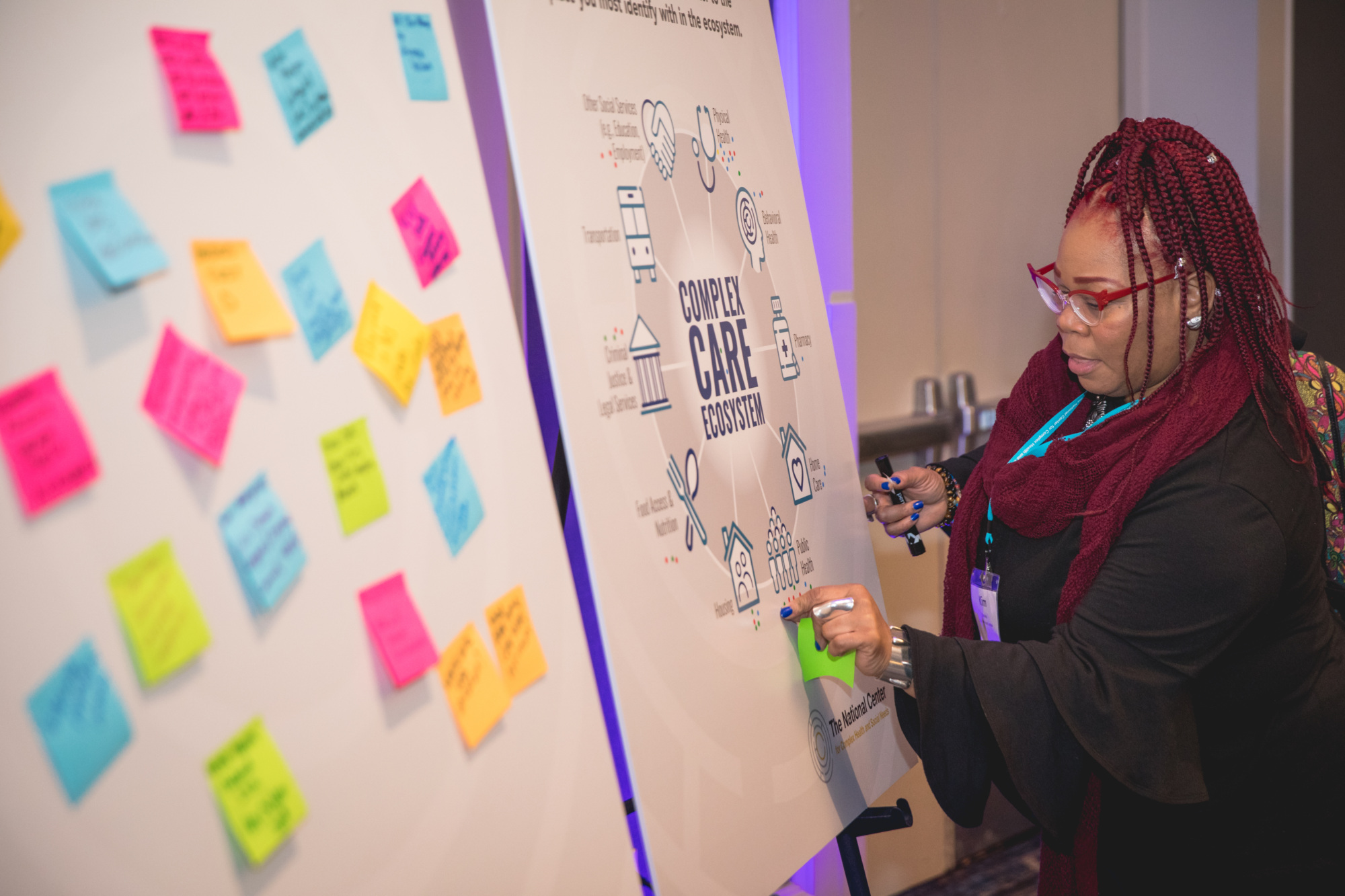
Adding post-it to poster labeled "complex care ecosystem"

See all our resources

More from our blog